iGaming SEO Link Building: How Regulated Operators Build Authority Without Penalty

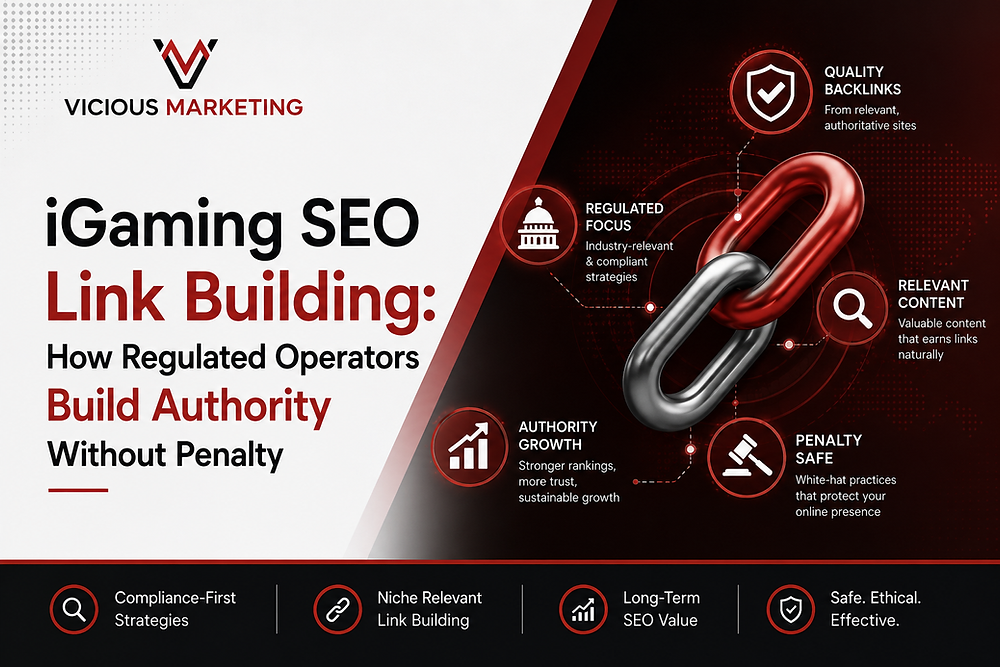
Link building has never been an easy aspect of SEO, and in the iGaming field, it takes another form entirely. Operators with casino, sports betting, and poker sites operate in one of the most tightly controlled verticals on the internet, marked by Google as YMYL (Your Money or Your Life) content, closely monitored by regulators, and constantly attacked by spammers looking to leverage the high monetary value of the field. One mistake or one poorly executed link-building effort from a licensed operator could lead to a manual penalty, rapid loss of rankings, or even the attentions of a license agency.
But an operator still needs its authority. Competing for keywords such as "best online casino" or "sports betting bonuses," they face the established competition of affiliates, comparison sites, and other operators that have been building their links for years. The issue is not if they should link build, but how.
Why iGaming Link Building Is Different
Most SEO advice defaults to generic tactics: guest posts, broken link building, digital PR. Those still apply here, but the vertical adds constraints that don't exist in, say, SaaS or e-commerce.
Regulatory sensitivity. Licensed operators answer to bodies like the UKGC, MGA, or state-level gaming commissions in the US. These regulators care about responsible gambling messaging, age-verification signals, and advertising standards, and increasingly, they look at where and how a brand is promoted online, not just what's on the site itself.
Google's YMYL scrutiny. Gambling content sits alongside finance and health as an area where Google's quality raters apply extra weight to trust signals. A backlink profile that looks manufactured, exact-match anchors, low-quality PBNs, irrelevant guest posts stuffed with casino links, is exactly the kind of pattern Google's spam systems are built to catch.
A saturated, spam-heavy niche. Because gambling keywords are lucrative, the vertical attracts an unusually high volume of link sellers, PBN operators, and "guaranteed placement" vendors. Ironically, the sheer volume of bad actors makes clean link building both harder to execute and more valuable when done well, it's a genuine differentiator.
The Foundation of iGaming SEO: Compliance Before Campaigns
Before any outreach begins, regulated operators need to align their link building strategy with their licensing obligations. This isn't a legal formality, it directly shapes what kind of links are even acceptable.
Jurisdiction-matching: The links and the content referring to a certain .com casino brand should not come from and be targeted at jurisdictions where that brand is not licensed to conduct its business. The UK-oriented company obtaining links from India or other non-regulated jurisdictions will end up with both a bad SEO and a compliance signal.
Responsible gambling context: Reputable publishers become more and more demanding about their gambling content – it should be accompanied by disclaimers on responsible gambling and age restrictions (18+/21+), as well as links to relevant services. It is better to work with those who already have these requirements.
Advertising standards alignment: Bodies like the ASA in the UK regulate how gambling is advertised, including editorial content that functions as promotion. Operators should treat sponsored content and guest posts with the same scrutiny as paid ads.
Baking these checks into the link building workflow up front avoids the scramble of retroactively disavowing links after a regulator or Google flags them.
iGaming Link Building Tactics That Hold Up
1. Digital PR Anchored in Real Data
The absolute longest-lasting way to build links for iGaming brands is through original research such as studies on player behavior, gambling trends per region, odds analysis, and responsible gambling research. Publications are cited by journalists or niche publications, they do not link to the bonus pages of casinos.
When a business publishes, for example, an annual report about sports betting trends per region, they get organic links from sports and financial publications that would never allow a guest post from an iGaming company directly. The link is created via citation, not by placement, which is exactly what Google's algorithms interpret as natural and not built-up.
2. Affiliate and Comparison Site Relationships (Done Properly)
Affiliates can be considered an acceptable element of the iGaming environment – regulatory bodies are fine with it as long as the proper disclosure procedures are adhered to (proper labeling, either “advertisement” or “affiliate”, no false bonus statements). The SEO issue is not the usage of affiliate links per se, but the anchor texts and the pattern of link distribution. If suddenly twenty low quality affiliates start building exact match "best online casino [name]" links during one single week, it will look just like a paid links program, which in fact it is.
Alternative approach: use diverse anchors (branded and natural), distribute over time, use affiliates with organic traffic.
3. Niche Publisher and Vertical Media Outreach
Beyond dedicated gambling affiliates, there's a broader ecosystem of sports media, finance blogs, and lifestyle publications that cover betting culture, esports, or entertainment. A well-placed feature in a sports outlet discussing betting trends around a major tournament, with a natural, contextual link back, carries far more trust weight than a link farm placement, and it's typically outside the reach of the same spam patterns Google is trained to detect.
4. Local and Land-Based Tie-Ins
For operators with retail sportsbooks, land-based casino partnerships, or regional licensing, local news coverage and local business directories offer an underused link source. A regional operator sponsoring a community event or partnering with a local sports team generates natural press coverage, and press coverage generates links that have nothing to do with a link marketplace.
5. Strategic Broken Link and Resource Page Building
This classic tactic still works well in iGaming specifically because so many older gambling resource pages accumulate dead links to sites that lost licenses or rebranded. Finding these gaps and offering a genuinely useful, compliant resource as a replacement is low-risk and rarely flagged, since it's fundamentally an editorial improvement rather than a paid insertion.
iGaming Link Building Mistakes to Avoid
PBNs and link farms: Even well-disguised private blog networks will be identified at some point, and in the highly monitored gambling niche, it's often the first thing that spam hunters look for.
Bulk guest posting on irrelevant sites: A gambling link on a cooking blog or generic "write for us" site is a clear mismatch signal.
Exact-match anchor over-optimization: Historically the fastest way to trigger an algorithmic anchor-text penalty; still true today.
Unlicensed jurisdiction targeting: Links and content aimed at regions where the operator isn't licensed can create legal exposure that outlasts any SEO benefit.
"Guaranteed placement" link vendors: If a vendor promises links on DA 60+ gambling sites for a flat fee, that inventory is almost certainly part of a private network already on Google's radar.
Success Metrics for Compliant Link Building
Rankings and referral traffic still matter, but regulated operators should also track:
- Referring domain diversity relative to competitors, not just raw link count
- Anchor text distribution, watching for unnatural concentration
- Link velocity relative to content and PR output, spikes without a corresponding news event are a red flag internally before Google ever sees them
- Compliance audit trail, keeping records of where content was placed and confirming disclosure and responsible gambling messaging were followed, which matters as much for regulators as for search engines
The Bottom Line
For regulated iGaming operators, sustainable link building isn't about finding a workaround for Google's guidelines, it's about recognizing that the guidelines and the regulatory requirements are pointing in the same direction: relevance, transparency, and earned trust. Digital PR built on real data, genuine affiliate and publisher relationships, and local press coverage all produce links that satisfy a compliance officer and a search algorithm simultaneously. The operators who treat those as one strategy, rather than two competing pressures, are the ones building authority that actually survives the next update, algorithmic or regulatory.